
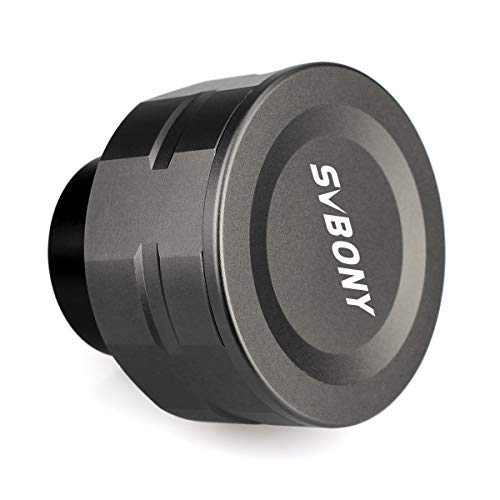
Choosing the best cameras for telescopes can be difficult as there are so many considerations, such as “SVBONY”. We have done a thorough research and found the top 3 best cameras for telescopes on the market right now.
We have searched and tested a variety of best cameras for telescopes ranging in prices from $25 up to $105. We recommend “SVBONY SV205 Telescope Camera, 8MP USB3.0 Electronic Eyepiece, 1.25 Inches Astronomy Camera for Telescope Astrophotography” as our top pick because of its best overall performance. Also, don’t skip the other top options and the buying guide of helpful information to guide you towards the perfect best cameras for telescopes.
* Our editing teams independently research, review, and recommend the best products based on extensive data analysis; if you click on the product links, we may earn a commission from qualifying purchases.
Our Top 3 Picks

Top 3 Reviews of best cameras for telescopes

SVBONY SV205 Telescope Camera, 8MP USB3.0 Electronic Eyepiece, 1.25 Inches Astronomy Camera for Telescope Astrophotography
Features
- Plug and play without driver; real-time dynamic observation by crystal clear image; the image sensor uses dark light compensation technology to greatly improve the SV205 planetary camera's image clarity in low light conditions
- In MJPG video format; you can use SV205 electronic telescope eyepiece to record video quickly and the frame rate up to 30FPS at 2K resolution 1920x1080; you can also choose YUV uncompressed video format; the speed will be 15FPS per second at 3264*2160 resolution
- SV205 astronomy camera allows you to capture a real-time video and transport to your laptop or PC; share the view of bright planets; the moon; and terrestrial targets through your computer with friends; family; and fellow astronomy enthusiasts
- SV205 electronic telescope eyepiece uses a 7.05MP IMX415 imaging sensor with 1.45µmx1.45µm pixel size; uses an extremely sensitive 1/2.8" CMOS color sensor; the image is clear
- SV205 interface is 1.25 inches. If it is not compatible, please check your telescope's eyepiece interface and select a suitable adapter
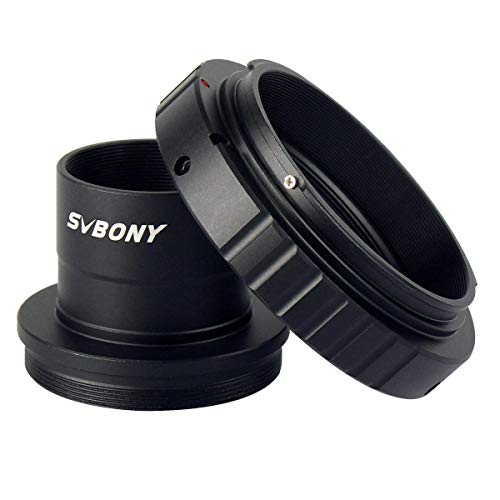
SVBONY T2 T Ring Adapter and T Adapter, 1.25 inches Metal Telescope Camera Adapter for Canon EOS Standard EF Lenses and Telescope Camera Astrophotography Accessories
Features
- Compatible with Canon EOS and Rebel SLR and DSLR Cameras and only compatible with Canon DSLR camera of EF mount; Note: it doesn't fit for EOS-M models;connect camera to telescope for direct;prime focus; photography convenient and easily
- Super easy to use;thread t adapter into t ring adapter;then thread the whole mount adapter into cameras to connect to telescope
- Universal t adapter fits all standard 1.25" diameter telescope microscope etc;t ring adapter is compatible for all standard 1.25" lenses of cameras;but not for SV13 spotting scope
- Metal materials and tight;non binding fit;solid and durable for long term use
- Manual focusing;some short-focus camera or telescope's optical tube may not be able to focus quickly;so it's great for you use an additional extension tube
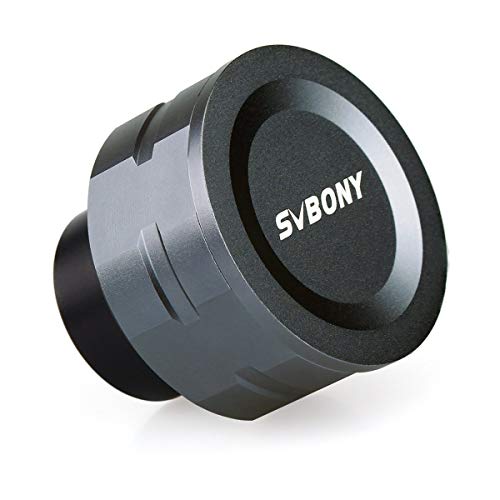
SVBONY SV105 Telescope Camera CMOS Electronic Digital Eyepiece for Telescope 1.25 inches Lunar Planetary Astronomy Camera for Beginners
Features
- SV105 telescope camera is the basic method for starting astronomical imaging; you can use the SV105 electronic telescope eyepiece to image it; which is more suitable for beginners who like to do astrophotography
- SV105 astrophotography camera is suitable for lunar and planetary photography; share the view of bright planets; moon and terrestrial targets; just point the telescope at the moon or planet and record a quick video; you can transfer the real-time view of the telescope to your laptop or PC
- Plug and play; no driver required; real-time dynamic observation; clear images; SV105 astronomy camera compatible with Windows system needs to download Sharpcap Capture; Linux system needs to download AstroDMx Capture; Android system needs to download USB Camera
- The image processor adopts dark light compensation technology; SV105 svbony camera can greatly improve the image clarity of the astronomy camera under low light conditions
- Interesting and useful USB planetary camera; standard 1.25 inches; threaded M28.5x0.6; can be used with telescope filters; directly connected to the telescope
How To Choose The best cameras for telescopes
Are you stressed out about finding a best cameras for telescopes? Have you been trying to decide which one to buy? Don’t worry, we’ve got you covered. Check out our top 3 best cameras for telescopes and find the perfect one for you.
If you’re feeling stressed about buying best cameras for telescopes, know that you’re not alone. Many people find it tough to choose the perfect one for themselves. We understand the pressure associated with the buying process! To help make your decision easier, we’ve put together a list of the best cameras for telescopes on the market. So take a deep breath and relax, because we’ve got you covered.
You’ve obviously stumbled upon this page because you’re curious about best cameras for telescopes. You’ve been hit with a ton of information, so it’s important to find a reliable source with credible options before making any decisions on which product would be best for your needs.
There are many ways to find out which product is right for you. You can buy guides or ratings websites. You can get word-of-mouth testimonials from friends or family members. You can find online forums where users share their personal experiences. You can find product reviews specifically found all over the internet. You can watch YouTube channels. Only thorough research will ensure that you get the right product.
But that’s not always easy, right? That’s why we’ve taken the time to compile a list of the best cameras for telescopes in today’s market, on your behalf, so that there will be no more worries for you.
How did we come up with the list, you ask? How did we create this buying guide?
• First, our algorithms collected as much information available about these products from trusted sources.
• We employed both Artificial Intelligence and large data volume to validate all collected information.
• Then our AI ranked them on their quality-to-price ratio using industry-standard criteria that let us pick the best cameras for telescopes currently on the market!
The products aren’t chosen randomly. We consider several criteria before assembling a list. Some of the criteria are discussed below:-
1. Brand Value: What happens when you go for a not-so-reputable brand just because the price seems cheap? Well, the chance of getting a short-lasting product goes higher. That’s because the renowned brands have a reputation to maintain, others don’t.
Top best cameras for telescopes brands try to offer some unique features that make them stand out in the crowd. Thus hopefully, you’ll find one ideal product or another in our list. We hope you’ll find the perfect product on our list.
2. Features: You don’t need a ton of features, but just the useful ones. We look at the features that matter and choose the top best cameras for telescopes based on that.
3. Specifications: Numbers always help you measure the quality of a product in a quantitative way. We try to find products of higher specifications, but with the right balance.
4. Customer Ratings: Would the hundreds of customers who have used the best cameras for telescopes before you say that they’re wrong? Better ratings mean that more people have had a good experience with the service.
5. Customer Reviews: Like ratings, customer reviews give you actual and trustworthy information, coming from real-world consumers about the best cameras for telescopes they used.
6. Seller Rank: This is interesting! Not only do you need a good best cameras for telescopes, you need a product that is trendy and growing in sales. This serves two objectives. Firstly, the growing number of users indicates the product is good. Secondly, the manufacturers will hopefully provide better quality and after-sales service because of that growing number.
7. Value For The Money: Cheap isn’t always good, they say. But that doesn’t mean that spending a lot of money on a flashy but underserving product is good either. We try to measure how much value for the money you can get from your best cameras for telescopes before putting them on the list.
8. Durability: When it comes to durability and reliability, best cameras for telescopes are in a class of their own. A robust and durable best cameras for telescopes will serve you for months and years to come.
9. Availability: Products come and go, new products take the place of the old ones. Probably some new features were added, some necessary modifications were done. What’s the point of using a supposedly good best cameras for telescopes if that’s no longer continued by the manufacturer? We try to feature products that are up-to-date and sold by at least one reliable seller, if not several.
10. Negative Ratings: Yes, we take that into consideration too! When we pick the top rated best cameras for telescopes on the market, the products that got mostly negative ratings get filtered and discarded.
These are the criteria we have chosen our best cameras for telescopes on. Does our process stop there? Heck, no! The most important thing that you should know about us is, we’re always updating our website to provide timely and relevant information.
Since reader satisfaction is our utmost priority, we have a final layer of filtration. And that is you, the reader! If you find any best cameras for telescopes featured here Incorrect, irrelevant, not up to the mark, or simply outdated, please let us know. Your feedback is always welcome and we’ll try to promptly correct our list as per your reasonable suggestion.